Gutter Sizes in Minnesota: 5-Inch vs 6-Inch
2026-08-20 · Gutter Protection
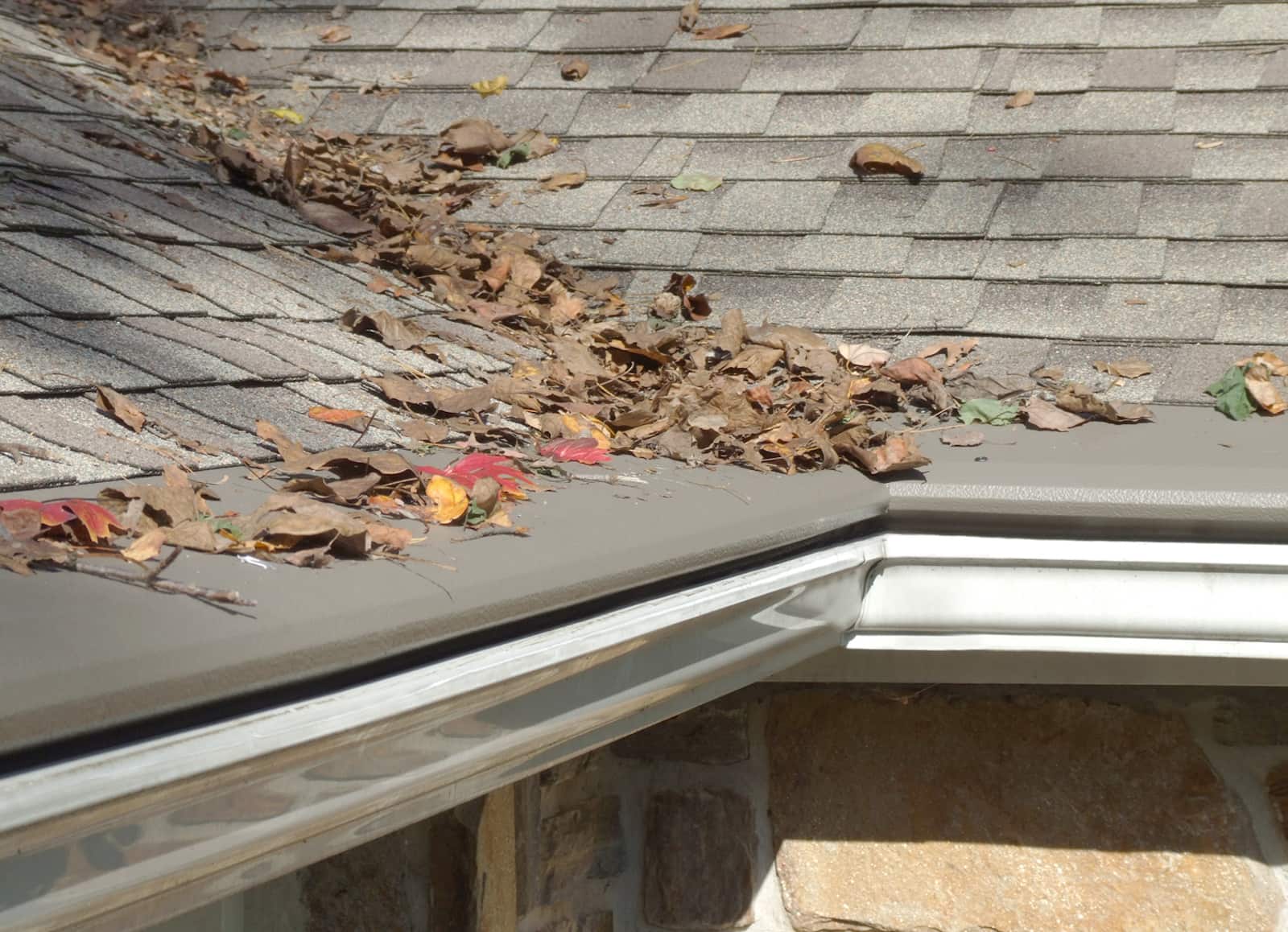
A straight Minnesota guide to gutter sizes: 5-inch vs 6-inch K-style capacity, what actually drives the choice here, and when a roof needs oversized gutters.
You are trying to figure out what size gutters your Minnesota home needs before anyone shows up with a ladder, and most "gutter sizes" pages hand you a national rain-intensity chart that has nothing to do with a Twin Cities roofline. Here is the part those charts miss: in Minnesota the number that matters is not the gentle summer rain rate, it is what a fast spring snowmelt does when weeks of snowpack let go over a few warm afternoons and all of it hits a cold, narrow eave at once. After sizing and installing seamless gutters across the metro and the western suburbs since 2001, owner Jeff Menke and our W-2 crews size for that surge, not for an average storm. This guide gives you the honest version of the 5-inch versus 6-inch question, and why the answer here leans bigger than the chart says.
<aside class="my-6 rounded-md border border-border bg-accent p-4 text-sm"><strong>The short version:</strong> Most Minnesota homes are fine on standard 5-inch K-style. Roofs with steep pitch, large drainage areas, or long runs feeding few downspouts are the ones that overshoot the front edge in a hard rain or a fast thaw, and those are the ones that want 6-inch.</aside>
Gutter Sizes: What K-Style 5-Inch and 6-Inch Actually Mean
Residential gutters come in two common K-style sizes: 5-inch and 6-inch, measured across the open top of the trough. A 5-inch K-style gutter is the standard on most Minnesota homes and handles a typical single-story or modest two-story roof without trouble. A 6-inch K-style is the oversized option: it holds noticeably more water and, just as important, it pairs with a larger 3-by-4-inch downspout instead of the standard 2-by-3-inch, so it drains faster too. K-style itself is the flat-backed, decorative-front profile you see on nearly every home here, and it carries more water than a rounded half-round of the same face height, which is exactly why it dominates in a climate that gets sudden surges instead of steady rain.
<blockquote class="my-6 border-l-4 border-primary pl-4 italic text-foreground/85">"People fixate on the trough width, but the bigger gutter's real advantage is the bigger downspout. A 6-inch gutter with a 3-by-4 outlet moves water off the roof far faster than a 5-inch on a 2-by-3, and speed is what keeps water from backing up at a cold eave."</blockquote>
The two sizes are not better and worse, they are matched to different roofs. Put a 6-inch gutter on a small rambler and you have paid for capacity you will never use. Put a 5-inch on a steep, wide two-story roof that dumps its whole face into one corner and you get overshoot every hard rain. The size is a fit decision, and the roof decides it.
5-Inch vs 6-Inch Gutters: How to Tell Which One Your Roof Needs
The right size comes down to how much water your roof throws at the gutter and how fast. Three things drive that, and you can eyeball all three from the ground. A bigger 6-inch gutter earns its place when the roof is large, steep, or funnels a lot of area into few outlets. A 5-inch is plenty when the roof is modest and the water spreads across several downspouts.
Here is what actually pushes a Minnesota roof toward 6-inch:
- Large roof drainage area. More square footage of roof draining to one gutter run means more water arriving at once. Big footprints and wide roof planes lean 6-inch.
- Steep roof pitch. A steep roof sheds water faster and with more force, so it can overshoot a narrow gutter even at a moderate rain rate. Steep pitch is one of the strongest reasons to size up.
- Long runs feeding few downspouts. A long gutter with only one or two outlets has to carry a lot of water a long way. Adding a downspout or going to 6-inch with 3-by-4 outlets fixes the bottleneck.
- A history of overshoot or ice damming at a specific eave. If one edge always sheets water over the front or dams up every winter, that eave is telling you it is undersized for what it catches.
<aside class="my-6 rounded-md border border-border bg-accent p-4 text-sm"><strong>Minnesota fact:</strong> The worst-case load here is rarely a summer storm. It is a fast spring thaw, when a warm stretch melts weeks of snowpack and all of it runs to a cold, narrow eave over a couple of afternoons. That surge, plus freeze-thaw at the edge, is what oversizes a gutter in this climate.</aside>
Most homes never need to size up. A standard single-story or average two-story roof in a metro subdivision drains cleanly on 5-inch K-style with properly placed downspouts. The size conversation only really opens up on the bigger, steeper, or more cut-up rooflines. When you want the trough sized and installed right, our crews get properly sized GenGo seamless gutters installed custom-mitered to your roofline. Want it measured? Call 612-509-5693 for a free in-home estimate.
What Size Gutters Do I Need? The Honest Answer for a Minnesota Home
For most Minnesota homes, 5-inch K-style with correctly placed downspouts is the right size, and going bigger is money spent on capacity the roof will never use. Because 6-inch gutters and larger downspouts add material and labor, size is one of the factors in what gutter installation costs by size in MN, which is worth reading before you decide to upsize. Size up to 6-inch when the roof is large, steep, or funnels a big drainage area into few outlets, or when a specific eave has a history of overshooting or ice damming. That is the whole rule, and everything else is just applying it to your actual roofline.
<blockquote class="my-6 border-l-4 border-primary pl-4 italic text-foreground/85">"Half the time the fix is not a bigger gutter at all, it is another downspout. A long 5-inch run that overshoots often just needs a second outlet so the water has somewhere to go before it piles up."</blockquote>
That is why we do not quote a size over the phone. Roof area, pitch, run length, and downspout placement all interact, and the only way to get the size right is to look at the roof. When you compare aluminum, K-style, and copper gutter profiles with us, sizing is part of the same conversation: profile, size, and downspout count get decided together so the finished system actually moves the water your roof produces.
When you do NOT need oversized gutters
We will say the part that might cost us the sale. If you have a single-story home, a modest or newer two-story in a subdivision like Maple Grove or Woodbury, a roof of average pitch, and downspouts that already drain cleanly with no overshoot or ice damming history, you do not need 6-inch gutters. Standard 5-inch K-style is the correct, cheaper choice, and anyone pushing you to oversize a roof that does not call for it is selling you capacity you will never use. If your current gutters overflow at only one spot, ask about adding a downspout before you pay to upsize the whole house. A measured look is the only honest way to know which camp your roof is in.
Do Bigger Gutters Prevent Overflow? Sizing Is Only Half the System
A correctly sized gutter prevents overflow from rain volume. It does nothing about overflow from debris, and in Minnesota debris is the more common cause. A 6-inch gutter packed with cottonwood seed, pine needles, and oak and maple leaves overflows exactly like a clogged 5-inch one, because the debris steals the capacity you paid for. Sizing solves the water-volume half of the problem. Keeping the trough clear solves the other half, and in a heavy-canopy freeze-thaw climate the second half is where most overflow and ice damming actually starts.
<aside class="my-6 rounded-md border border-border bg-accent p-4 text-sm"><strong>Buy-once framing:</strong> The right size gets the water into the gutter. A solid cover keeps the gutter clear so that capacity stays available all season. Size without protection just gives debris a bigger trough to fill.</aside>
That is why we size and protect together. You can add clog-free Gutter Helmet protection to any gutter size, 5-inch or 6-inch. It is a patented surface-tension cover with a solid nose-forward, bull-nose edge, mounted under your existing shingles at the same pitch as the roof, with no holes, slots, or screens for debris to clog. It is rated to handle over 22 inches of rain per hour, far more than any Minnesota downpour delivers, which means the cover is never the bottleneck no matter which gutter size sits under it. It carries a Triple Lifetime Warranty and a lifetime no-clog guarantee: if your gutters ever clog after installation, we clean them for free.
Why the Minnesota Climate Decides the Size
A gutter-size decision in Minnesota is really a snowmelt-and-freeze decision. Freeze-thaw cycling, heavy snow load, and a fast spring thaw all push a lot of water to the coldest, narrowest part of the roof in a short window. An undersized gutter overshoots the front edge, sends water down the fascia and foundation, and feeds an ice dam at the eave. An oversized gutter that clogs does the same thing once debris fills it. The size and the protection have to be right together, or the water finds its way to the fascia, soffits, and foundation below, and repairing that damage costs far more than the gutters did.
<blockquote class="my-6 border-l-4 border-primary pl-4 italic text-foreground/85">"An undersized eave overshoots in a fast thaw. A clogged eave overshoots in any rain. Both send water where you do not want it, and in a freeze-thaw climate both feed the same ice dam."</blockquote>
That is the case for solving it once. Getting the right seamless K-style size for your roof, then adding a solid cover so the capacity stays clear, means you are not overshooting in a spring thaw and not back on a ladder every fall. Ready when you are: 612-509-5693.
How We Size and Install Your Gutters
We keep this straightforward, and we size for your roof rather than a chart.
- You request a free in-home estimate. No charge, no obligation.
- We measure and inspect. We look at your roof area, pitch, run lengths, existing downspout placement, and any eaves that overshoot or ice up, then recommend 5-inch or 6-inch and the right downspout count.
- You get a plan in writing. We lay out the seamless gutter size, downspout placement, optional Gutter Helmet protection, financing, and current promotions in plain language.
- We install. Every installation is performed by W-2 employees of Gutter Helmet of Minnesota, never subcontractors, and a project is typically completed in one day on an average-sized home. Every seamless gutter is custom-mitered on site to fit your roofline.
We have been doing this as a family-owned company since 2001, with more than 45,000 customers served. When you call, you are talking to the people who will actually be at your house. Ask about our current 15-Months-No-Interest financing and save-up-to-30% offer, plus Seniors and Military Veterans discounts, when you book. To get started, call 612-509-5693 or request a free in-home estimate.
Frequently Asked Questions
What size gutters do I need in Minnesota?
For most Minnesota homes, standard 5-inch K-style gutters with correctly placed downspouts are the right size. Step up to 6-inch K-style when the roof is large, steep, or funnels a big drainage area into only one or two downspouts, or when a specific eave has a history of overshooting water or forming ice dams. Roof area, pitch, run length, and downspout placement all interact, so the only accurate answer comes from measuring the roof. That is exactly what a free in-home estimate is for.
Should I get oversized gutters for Minnesota snow melt?
Sometimes, and it depends on the roof. The worst-case load here is a fast spring thaw, when a warm stretch melts weeks of snowpack and sends it all to a cold, narrow eave over a couple of afternoons. Large, steep roofs and long runs with few downspouts can overshoot a 5-inch gutter under that surge, and those are the roofs that benefit from 6-inch gutters with larger 3-by-4-inch downspouts. A modest roof of average pitch that already drains cleanly does not need to upsize. The honest way to tell is to have the roofline measured, and to remember that a bigger gutter only helps if it stays clear, which is what Gutter Helmet protection is for.
Do bigger gutters prevent overflow?
Bigger gutters prevent overflow caused by rain volume, but not overflow caused by debris. A 6-inch gutter packed with cottonwood seed, pine needles, and leaves overflows exactly like a clogged 5-inch one, because the debris takes up the extra capacity you paid for. In Minnesota's heavy-canopy, freeze-thaw climate, debris-driven overflow is the more common cause, so sizing and protection go together. Sizing gets the water into the gutter, and a solid Gutter Helmet cover keeps the trough clear so that capacity stays available all season.
What is the difference between 5-inch and 6-inch K-style gutters?
The measurement is the width across the open top of the trough, so a 6-inch K-style holds more water than a 5-inch. Just as important, 6-inch gutters pair with larger 3-by-4-inch downspouts instead of the standard 2-by-3-inch, so they also drain faster. K-style is the flat-backed, decorative-front profile on most Minnesota homes, and it carries more water than a rounded half-round of the same height, which matters when a fast spring thaw and a summer downpour hit close together. Most homes are fine on 5-inch; the larger size is for big, steep, or hard-draining rooflines. We size it during a free in-home estimate; call 612-509-5693.